The Significance and Artistry of Mosque Carpets
Mosque carpets are more than just functional floor coverings — they are integral elements of Islamic architecture, embodying spiritual, cultural, and artistic values. Found in mosque carpets cross the world, from small prayer halls to grand architectural marvels, these carpets are designed with a deep understanding of tradition, comfort, and aesthetics.
Purpose and Spiritual Significance
In Islam, cleanliness and order are crucial aspects of worship. The mosque carpet provides a clean, designated space for prayer, allowing worshippers to perform salah (prayer) in a hygienic and comfortable environment. As Muslims pray directly on the ground, often placing their foreheads to the floor, the softness and cleanliness of the carpet enhance both the comfort and sanctity of the act.
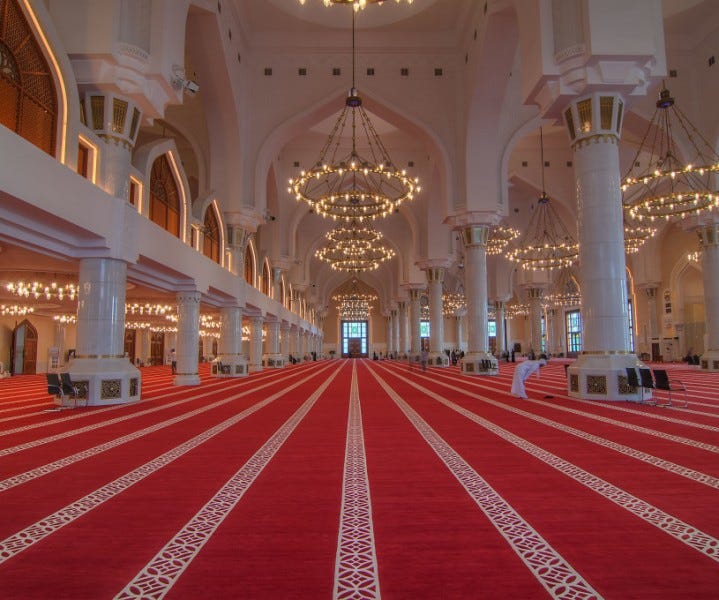
Moreover, mosque carpets help define individual prayer spaces. Most are designed with distinct rows or patterns, such as mihrab-shaped motifs, guiding worshippers to align uniformly toward the Qibla (the direction of the Kaaba in Mecca). This structured layout fosters unity and discipline during congregational prayers.
Design and Materials
The design of mosque carpets often incorporates Islamic geometric patterns, arabesques, and calligraphy, avoiding depictions of living beings, in line with Islamic artistic principles. These motifs not only beautify the space but also reflect the intricate artistry of Islamic culture. Many carpets include a repeating niche pattern (similar to the mihrab in a mosque wall), which symbolizes the direction of prayer and visually demarcates individual spaces.
Materials used in mosque carpets are carefully selected to ensure durability, comfort, and ease of maintenance. Wool is a traditional choice for its softness and resilience, while modern carpets may also incorporate nylon or polypropylene for enhanced durability and stain resistance, especially in high-traffic areas.
Customization and Installation
Because mosques vary in size and architectural design, carpets are often custom-made. Professional carpet manufacturers offer services such as site measurement, Qibla alignment, and wall-to-wall installation, ensuring the carpet fits seamlessly and fulfills religious and aesthetic requirements. Acoustic benefits are another advantage — mosque carpets help absorb sound, creating a quiet, focused atmosphere for worship.
Regional Variations
From the intricate hand-knotted carpets of Iran to the vibrant machine-made versions found in Turkey and the Gulf, mosque carpets reflect regional styles and preferences. In the UAE, for instance, many mosques feature lush, high-density carpets in shades of green, red, or blue, harmonizing with the mosque’s interior decor and architectural identity.
Conclusion
Mosque carpets are a vital element of Islamic worship spaces. They blend functionality with spirituality, offering comfort for daily prayers while showcasing the beauty of Islamic design. Whether handcrafted by artisans or produced using advanced machinery, these Carpets Dubai continue to evolve, reflecting the changing needs and tastes of Muslim communities worldwide — yet always preserving their sacred purpose.
As mosques remain central to Islamic life, so too do the carpets that welcome millions of worshippers, day in and day out, offering a soft, serene place to connect with the Divine.


Comments
Post a Comment